Quality education is the foundation of a healthy economy
Yet in South Africa, 81% of Grade 4 learners cannot read for meaning* and 63% of Grade 5 learners struggle with basic arithmetic**. These gaps can affect employment prospects later in life. We offer #Hope4Youth, through evidence-based interventions in schools in underserved communities. Every child who is developmentally on track, and masters literacy, numeracy and entrepreneurial skills, is better equipped to thrive.
* Progress in International Reading Literacy Study (PIRLS) 2021.
** Trends in International Mathematics and Science Study (TIMSS) 2019.
Our Education Development Programme is committed to addressing the root causes of poor education and skills gaps. We strengthen foundational learning and improve school functionality by investing in four key pillars:
Overall school functionality is evaluated and school management teams are capacitated, with a focus on developing acceptable functionality across the nine areas of whole-school evaluation.
Educators are empowered through targeted interventions focusing on pedagogy, content knowledge, e-learning, technology integration, data-driven decision-making, and effective use of baseline and formative assessments.
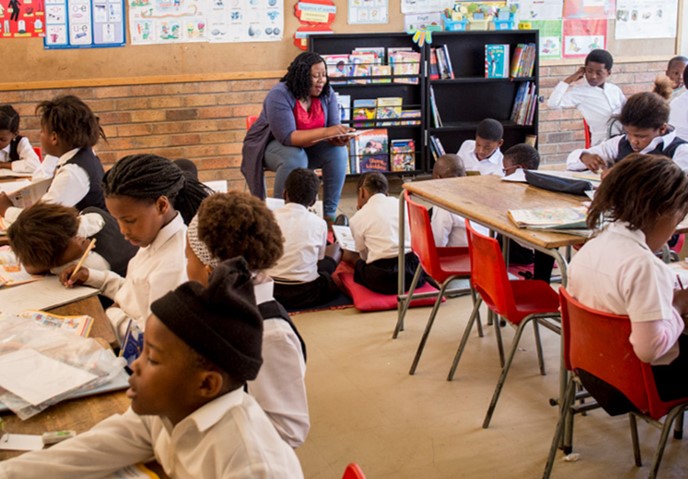
We develop the potential of learners by strengthening school readiness, literacy, numeracy and entrepreneurial thinking through tech-led learning, collaborative platforms, physical education and creative arts.
We nurture effective relationships with government, strategic partners, businesses, communities and parents. Learners shine brightest when school ecosystems are actively involved in their learning journeys.
For the 2026 Financial Year
30 March 2025 to 26 March 2026
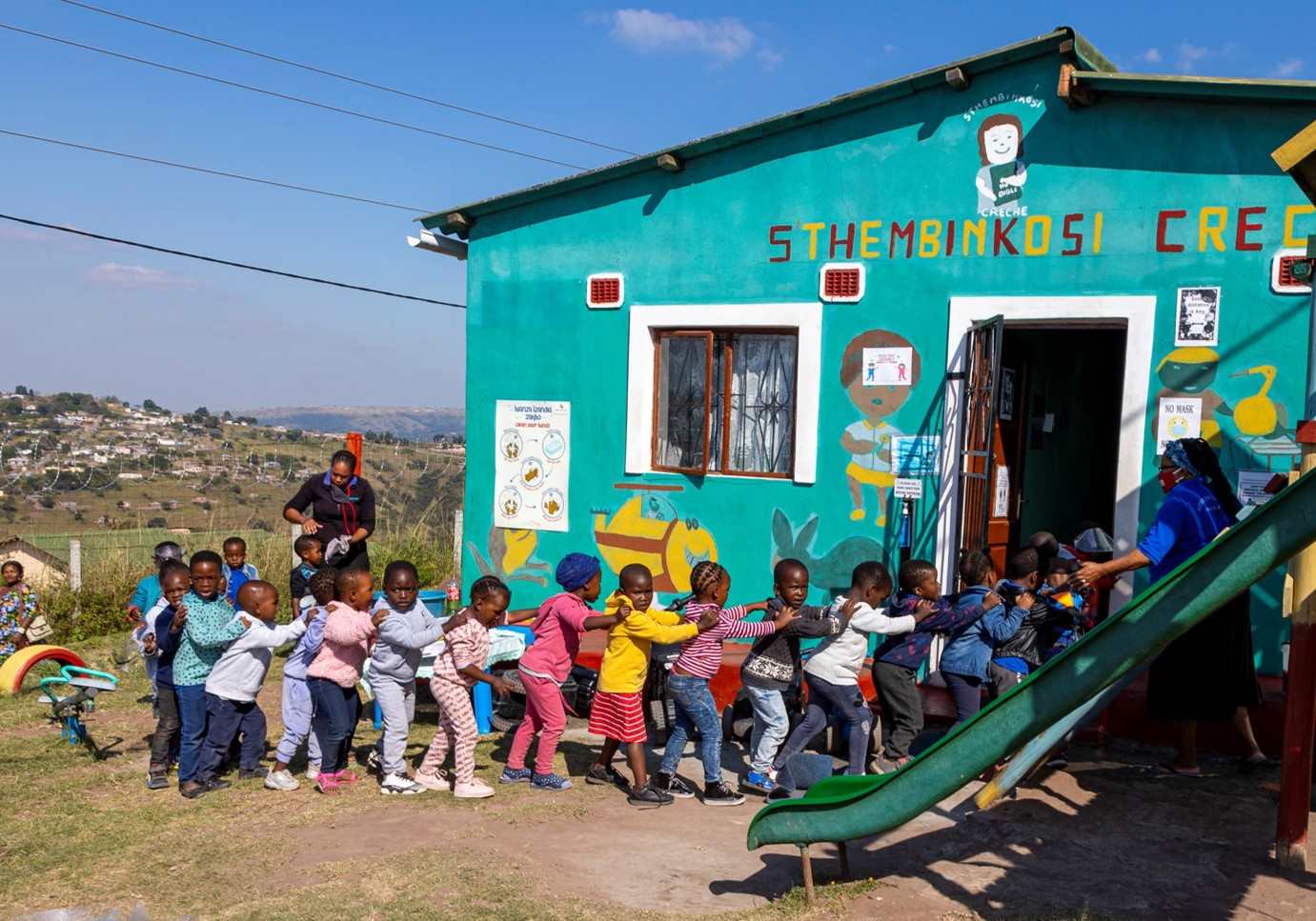
Our Education Development portfolio is designed to intervene where education breaks down earliest and where change has the greatest long-term impact. Our focus is on addressing systemic learning gaps in ECD centres and public schools by improving early learning outcomes, supporting early entrepreneurial thinking, building educator and school management capability, and creating youth-led roles and enterprises within the education system.
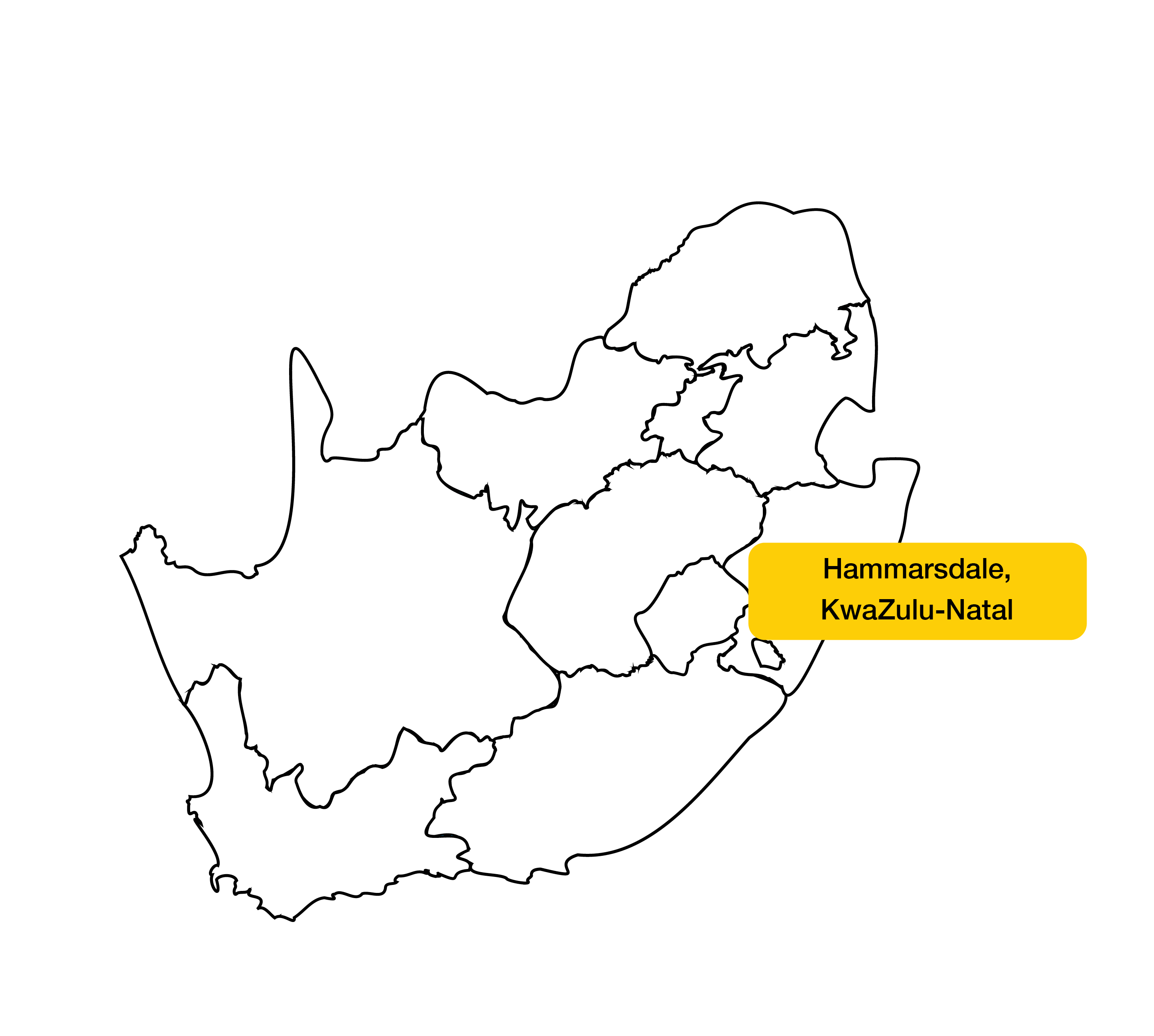
Hammarsdale is a key community to Mr Price Group. It is home to the Group’s Distribution Centre and is 45km from the Durban Support Centre. Mr Price Foundation has been active in low-income schools here since 2018. We adopted a sharpened focus on 21 primary schools from 2025, with 11 high schools currently piloting an early entrepreneurship education programme.
Our efforts to tackle youth unemployment begin with education. Creative arts and physical education are uniquely placed to support
We thank educators supported by our EduRise programme for prioritising baseline assessments. Baselines help educators pitch their content at
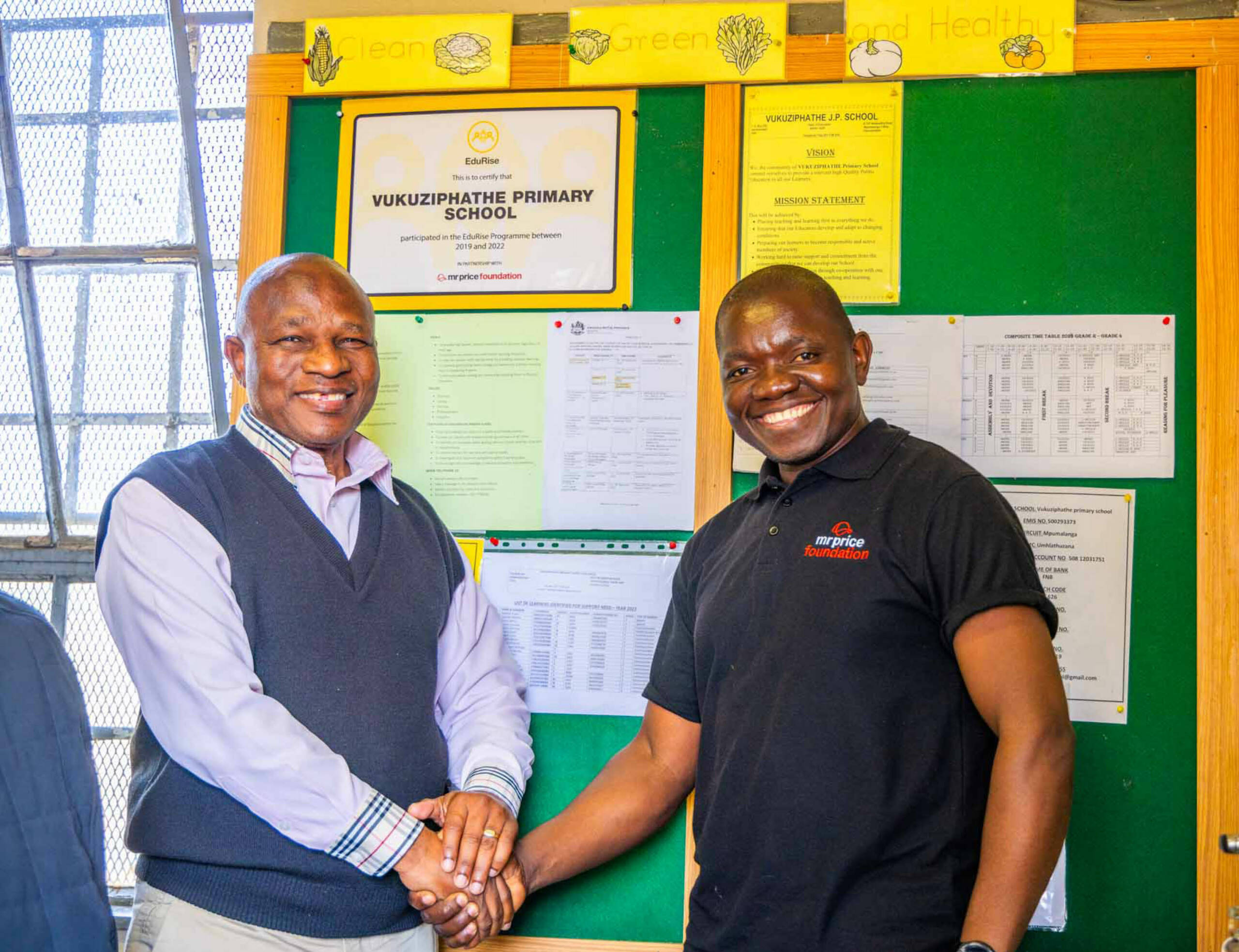
Thank you Mr Mkhize for ensuring that EduRise learnings live on! © Pierre Tostee / Mr Price Foundation. Mr
Our EduRise programme will soon be celebrating the culmination of a fulfilling journey with schools in Tongaat and Verulam. Since
MR PRICE FOUNDATION believes that learning starts long before school. If we want South Africa’s children to thrive at school,
EVERY DAY is Mandela Day at Mr Price Foundation – and we’re always pleased to be joined by enthusiastic
The future of our children lies in our hands. Together, we will drive long-term systemic change through strong school leadership, empowering educators and ensuring every child has the opportunity to succeed.
Be a part of something extraordinary! Become a partner and help close the growing education gap between rich and poor.
No, the programme does not provide sponsorships. Please see Mr Price Foundation’s donation request
No, Mr Price Foundation does not build infrastructure projects.
All Education Development Programme interventions are designed to assist educators and schools to better deliver on their duties. They are therefore CAPS aligned and do factor in the provincial and national department of education’s strategic plans.
Follow this link to become an Education Development Programme partner.
No. All Education Development Programme interventions are implemented with sustainability in mind and in a way that does not create dependencies. There is therefore a clear exit strategy that ensures beneficiaries are empowered to run the programmes independently post the intervention period.